Surgical
Tired Eyes That Never Look Rested: The Complete Guide to Lower Blepharoplasty
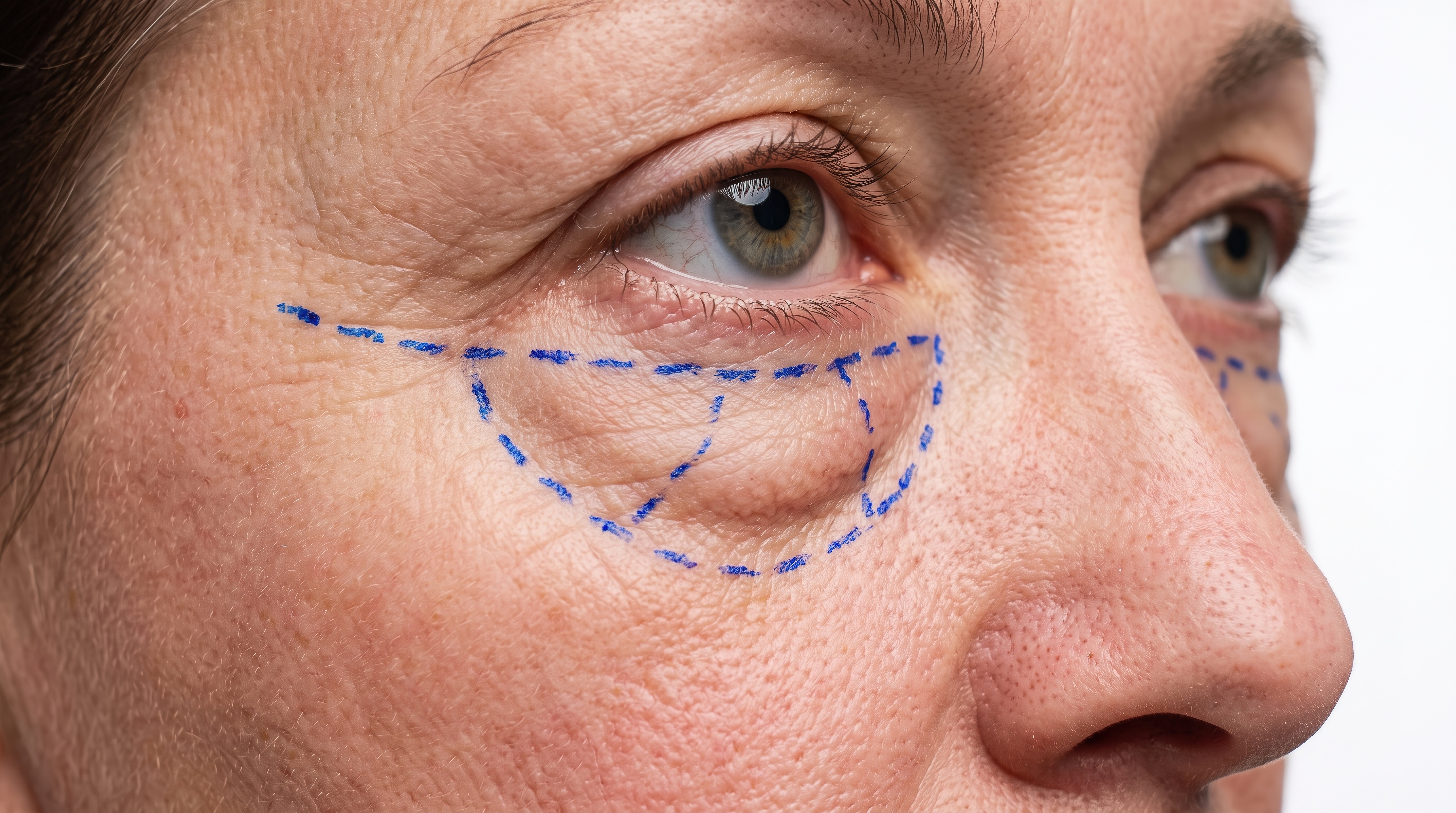
You can sleep eight hours. Drink more water. Try caffeine serums, eye creams, cold rollers, concealer, and every viral under-eye trick imaginable. And still hear: “You look tired.” For some people, under-eye bags aren't really about exhaustion at all. They can be the visible result of genetics, protruding orbital fat, skin laxity, loss of support around the lower eyelid, changes at the lid-cheek junction, or several of these factors occurring together. That is where lower blepharoplasty enters the conversation. Lower blepharoplasty is surgery designed to improve the appearance of the lower eyelid and surrounding under-eye region. Depending on the patient's anatomy, a surgeon may remove or reposition fat, address excess skin, support the lower eyelid, or combine several techniques. And despite being commonly referred to as “eye-bag surgery,” modern lower blepharoplasty is considerably more sophisticated than simply cutting away fat beneath the eyes. The goal today is often not to make someone look dramatically different. It is to make the transition from the eyelid to the cheek look smoother, more rested, and more natural.
Stay Informed
A better inbox starts here.
Get thoughtful beauty and wellness guidance from the Aledore Journal.
Find Locally
Find trusted providers near you
Why Do Under-Eye Bags Happen?
The lower eyelid is made up of layers of skin, muscle, connective tissue, ligaments, and orbital fat. Behind the eyelid sits fat that helps cushion and support the eye. With age—and sometimes simply because of genetics—the tissues that normally contain this fat may become less supportive. Fat can begin to protrude forward, creating the fullness people commonly describe as under-eye bags. At the same time, other changes may occur:
- skin becomes thinner or looser
- fine lines become more visible
- the lower eyelid may lose support
- the tear trough can become more pronounced
- the cheek can lose volume
- the transition between the eyelid and cheek becomes less smooth
This is why two people with what appear to be the same “eye bags” may need very different treatments. One person may primarily have protruding fat. Another may have significant skin excess. Another may actually have a hollow tear trough that creates a shadow. And someone else may have all three. A successful consultation therefore starts with anatomy—not the procedure name.
What Is Lower Blepharoplasty?
Lower blepharoplasty is a surgical procedure used to improve age-related or hereditary changes involving the lower eyelids. The American Society of Plastic Surgeons lists concerns such as bags beneath the eyes, excess lower-eyelid skin and fine wrinkles among issues eyelid surgery may address. But there isn't one single lower blepharoplasty technique. The surgery can be customized depending on the anatomy of the individual patient. Two broad approaches are commonly discussed: transconjunctival lower blepharoplasty and transcutaneous lower blepharoplasty. Understanding the difference can help make the procedure considerably less mysterious.
The Transconjunctival Approach
With a transconjunctival lower blepharoplasty, the incision is made through the inside surface of the lower eyelid. That means there is no external skin incision required to access the deeper fat compartments. This approach can be particularly useful when the primary concern is protruding orbital fat and there isn't a large amount of excess skin requiring removal. Through the internal incision, the surgeon may remove or reposition fat. One advantage is that the approach avoids an external incision through the lower-eyelid skin. It can also help preserve certain supporting tissues of the lower lid. But it isn't automatically the best approach for every patient. Someone with significant loose skin may require additional skin treatment or a different surgical strategy.
The Transcutaneous Approach
A transcutaneous, or external, approach typically involves an incision placed just beneath the lower eyelashes. This allows the surgeon to address skin as well as deeper structures. Depending on the procedure, the surgeon may:
- remove a conservative amount of excess skin
- reposition or remove orbital fat
- modify muscle
- tighten or support the lower eyelid
- address the lid-cheek junction
The operative plan depends on the patient's anatomy. And in lower blepharoplasty, conservative surgical judgment is particularly important. Too much tissue removal can create problems of its own.
The Big Change in Modern Blepharoplasty: Don't Just Remove the Fat
Older approaches to lower blepharoplasty often focused heavily on removing protruding fat. That makes intuitive sense. If fat is creating a bag, remove the fat. But the aging face is more complicated. Removing too much fat can leave the under-eye region looking hollow or skeletonized. For certain patients, surgeons instead reposition existing orbital fat. The fat can be moved toward depressions such as the tear trough to create a smoother transition between the lower eyelid and cheek. Instead of asking: “How much fat should we remove?” the more sophisticated question may be: “Where should the volume be?” That shift is one of the reasons modern lower blepharoplasty can look considerably more natural than the overly hollow under-eye appearance sometimes associated with older techniques.
What Is the Tear Trough?
The tear trough is the groove extending from the inner corner of the eye downward and outward toward the cheek. As facial anatomy changes, that groove may become more visible. The result can be a shadow underneath the eye that makes someone appear tired even when they aren't. This distinction matters because:
A bag and a hollow are not the same thing.
Removing fat from someone whose primary problem is hollowing can potentially exaggerate the problem. Conversely, simply adding filler underneath a prominent fat pad may not address the underlying bag. Lower-eyelid rejuvenation therefore requires evaluating the entire relationship between: eyelid + fat + tear trough + cheek + skin.
Can Lower Blepharoplasty Fix Dark Circles?
Sometimes—but not necessarily. “Dark circles” aren't one diagnosis. Under-eye darkness can result from:
- pigmentation
- thin skin
- visible blood vessels
- shadowing from a tear trough
- protruding fat
- facial anatomy
- combinations of these factors
If darkness is primarily caused by shadow, changing the contour of the lower eyelid may improve how dark the area appears. But surgery doesn't automatically erase pigmentation or visible vascular coloration. This is one of the most important expectations to establish before surgery. The right question isn't: “Will blepharoplasty remove my dark circles?” It is: “What is causing my dark circles?”
What Lower Blepharoplasty Can Potentially Improve
Depending on anatomy and surgical technique, lower blepharoplasty may improve:
- prominent under-eye bags
- protruding lower-eyelid fat
- excess or lax lower-eyelid skin
- some fine wrinkling
- tear-trough contour
- the transition between the eyelid and cheek
- an appearance of chronic tiredness caused by lower-eyelid anatomy
But it cannot correct every sign of aging around the eyes.
What It Does NOT Automatically Fix
Lower blepharoplasty isn't a universal cure for:
- crow's-feet caused primarily by muscle movement
- significant skin pigmentation
- every form of dark circles
- drooping eyebrows
- upper-eyelid hooding
- all fine lines
- every type of midface volume loss
A patient may need an entirely different treatment—or a combination of treatments—depending on the actual cause of the concern.
If your eyes always look tired, the problem may not be your eyes.
It may be the relationship between the lower eyelid and the cheek. One of the biggest mistakes in aesthetic treatment is identifying a visual complaint and immediately assigning a product to it. Under-eye bags = filler. Fine lines = laser. Dark circles = skin care. Real anatomy isn't that simple. Sometimes the best aesthetic result comes not from adding more—but from understanding exactly what is creating the shadow, bulge, hollow, or loose skin in the first place.
Is Lower Blepharoplasty Better Than Under-Eye Filler?
Neither treatment is universally “better.” They solve different anatomical problems. Under-eye filler may be considered in selected patients when hollowing or volume deficiency is an important contributor. Lower blepharoplasty may be more appropriate when protruding fat, skin excess, or structural lower-eyelid changes are driving the concern. There are also patients who may not be ideal candidates for either treatment. That is why the consultation is so important. The correct treatment should follow the diagnosis—not the trend.
Who Might Be a Candidate?
Potential candidates may include people bothered by persistent lower-eyelid bags, skin excess, or contour changes who are medically appropriate for elective surgery and have realistic expectations. But lower-eyelid anatomy needs to be assessed carefully. Surgeons may examine factors such as:
- lower-lid laxity
- eye prominence
- cheek support
- tear-trough anatomy
- fat distribution
- skin quality
- previous eyelid surgery
- dry-eye symptoms
- overall ocular health
Certain anatomical relationships can increase the risk of postoperative lower-lid malposition, which is why this procedure should never be reduced to simply “removing eye bags.”
What Is Recovery Like?
Swelling and bruising are normal parts of early healing. Patients may also experience irritation, temporary dryness, tenderness, or tightness. The American Society of Plastic Surgeons notes that many blepharoplasty patients are socially presentable in approximately 10 to 14 days, although healing continues well beyond that point and final results may take months to settle. That doesn't mean everyone looks completely healed at two weeks. Recovery varies with:
- surgical technique
- amount of work performed
- bruising tendency
- skin characteristics
- other procedures performed at the same time
- individual healing
It is better to think of recovery as a process rather than a countdown.
The Risks Deserve Attention
Lower blepharoplasty can produce beautiful results, but it is still surgery around the eye. Potential complications include:
- swelling and bruising
- dry or irritated eyes
- infection
- bleeding
- scarring
- temporary or persistent sensation changes
- difficulty closing the eyes
- asymmetry
- lower-eyelid retraction
- lid lag
- ectropion, where the lower eyelid turns outward
- changes in contour
- need for revision surgery
Rare but serious complications involving the eye and vision are also possible. A 2025 review of lower blepharoplasty literature found an overall low complication profile in the published studies it evaluated, but the authors also emphasized the need for more rigorous comparisons among techniques. The appropriate takeaway isn't that complications are common. It's that surgeon selection and technique matter enormously.
Why Lower-Eyelid Position Matters
One of the most recognizable complications after lower blepharoplasty is a change in the position or shape of the lower eyelid. If the eyelid pulls downward, more of the white part of the eye may become visible. In more severe situations, the lid may turn outward. This can affect appearance as well as eye comfort and function. Modern lower-eyelid surgery therefore places substantial emphasis on preserving or supporting the lower lid when necessary. Depending on anatomy, surgeons may perform supportive procedures such as canthopexy or canthoplasty as part of the overall plan. Again, there is no single operation called “the lower bleph.” There is an individualized surgical strategy.
What Makes a Natural Result?
Probably the most successful lower blepharoplasty is the one people can't identify. The goal generally shouldn't be: no fat beneath the eye. Human faces naturally contain volume. Instead, the goal is often a smoother transition from the lower eyelid into the cheek while preserving the natural character and shape of the eyes. That may require restraint. Sometimes removing less creates the better result.
How Long Do Results Last?
Blepharoplasty results are considered long-lasting, but surgery cannot stop the biological aging process. Skin, fat, bone and connective tissues will continue to change with time. That doesn't mean the procedure suddenly “wears off.” Rather, the face continues aging from its new postoperative starting point. Lifestyle, genetics, sun exposure, skin quality and anatomy all influence how the eye area changes in the years following surgery.
Questions to Ask Your Surgeon
Before considering lower blepharoplasty, ask:
1. What is actually creating my under-eye appearance?
Ask the surgeon to explain your anatomy rather than simply recommend an operation.
2. Would you remove fat or reposition it?
And why?
3. Would you use a transconjunctival or external approach?
The answer should be based on your anatomy.
4. Do I have lower-lid laxity?
If so, ask whether additional support is necessary.
5. Will this improve my dark circles?
Ask which component of the darkness is actually surgical.
6. What won't the operation correct?
This may be one of the most valuable questions.
7. How often do you perform lower blepharoplasty?
The lower eyelid is anatomically complex.
8. What complications do you see most often?
A credible surgeon should discuss complications openly.
9. What happens if my lower eyelid position changes?
Ask how that complication would be managed.
10. Can I see before-and-after photographs of patients with anatomy similar to mine?
Look beyond dramatic transformations. Pay attention to eye shape, eyelid position, symmetry, contour and whether the results still look like the same person.
Choosing the Right Surgeon
Lower blepharoplasty may be performed by appropriately trained surgeons with expertise in eyelid and facial surgery, including plastic surgeons, facial plastic surgeons and oculoplastic surgeons. The title alone isn't enough. Look at:
- board certification relevant to the surgeon's specialty
- specific training
- experience performing lower-eyelid surgery
- accredited surgical facilities
- before-and-after results
- how complications are managed
- whether the consultation feels anatomy-driven rather than sales-driven
The surgeon should be comfortable telling you when surgery isn't the best answer.
The Bottom Line
There is a reason lower blepharoplasty remains such a powerful procedure. For the right patient, persistent under-eye bags aren't something that can simply be moisturized away. They're anatomy. Lower blepharoplasty allows a surgeon to address that anatomy directly—whether through conservative fat removal, fat repositioning, skin management, structural support, or a carefully chosen combination. But the procedure is more nuanced than the nickname “eye-bag surgery” suggests. The lower eyelid sits at the intersection of the eye, cheek, skin, muscle, fat, and delicate supporting structures. Beautiful results depend on understanding all of them. Perhaps that's the best way to think about modern lower blepharoplasty: The goal isn't to erase the anatomy around your eyes. It's to restore the balance that makes them look like you—just less tired.
Aledore Editorial Note
Aledore Journal content is provided for educational purposes and is not a substitute for evaluation, diagnosis or treatment by a qualified healthcare professional. Surgical candidacy, technique, expected outcomes and risks vary according to individual anatomy and medical history. Anyone considering lower blepharoplasty should discuss the procedure and available alternatives with an appropriately qualified surgeon experienced in eyelid surgery.
Frequently asked questions
Why Do Under-Eye Bags Happen?: what should readers know?
The lower eyelid is made up of layers of skin, muscle, connective tissue, ligaments, and orbital fat. Behind the eyelid sits fat that helps cushion and support the eye. With age—and sometimes simply because of genetics—the tissues that normally contain this fat may become less supportive. Fat can begin to protrude…
What Is Lower Blepharoplasty?: what should readers know?
Lower blepharoplasty is a surgical procedure used to improve age-related or hereditary changes involving the lower eyelids. The American Society of Plastic Surgeons lists concerns such as bags beneath the eyes, excess lower-eyelid skin and fine wrinkles among issues eyelid surgery may address. But there isn't one…
The Transconjunctival Approach: what should readers know?
With a transconjunctival lower blepharoplasty, the incision is made through the inside surface of the lower eyelid. That means there is no external skin incision required to access the deeper fat compartments. This approach can be particularly useful when the primary concern is protruding orbital fat and there isn't a…
Free Download
Tired Eyes That Never Look Rested: The Complete Guide to Lower Blepharoplasty
Save this guide for later — yours to keep, reference, and share.
Near You
Find this service locally
References
- American Society of Plastic Surgeons — Eyelid Surgery
- American Society of Plastic Surgeons — Eyelid Surgery: Risks and Safety
- American Society of Plastic Surgeons — Eyelid Surgery Recovery
- American Academy of Ophthalmology — Lower Eyelid Blepharoplasty
- Bhattacharjee K, et al. — Lower Eyelid Blepharoplasty: An Overview
- Memon SF, et al. — Lower Eyelid Surgical Anatomy and the Implications for Blepharoplasty
- Gimenez AR, et al. — Safety and Complications in Lower Eyelid Blepharoplasty
- Xu Z, et al. — Complications of Fat Grafting and Repositioning for Lower Eyelid Bags: A Systematic Review and Meta-analysis
Editorial Disclosure: The content in this article is intended for informational purposes only and does not constitute medical advice, diagnosis, or treatment. Always consult a qualified healthcare provider before beginning any procedure, treatment, or wellness program. Individual results vary. Aledore does not endorse any specific provider, product, or treatment mentioned in this article. Conduct your own research and seek professional guidance before making any health or aesthetic decisions.
Medical Disclaimer: This article is for educational purposes only and is not a substitute for individualized medical, dental, or wellness advice, diagnosis, or treatment. Consult an appropriately qualified professional before making treatment decisions.
View Count Disclosure: The article-view total shown above is a sample figure used to preview this design and does not represent verified reader traffic. Live analytics may replace the sample total in the future.