
Wellness
“Ozempic Face,” Hair Loss, and Loose Skin: What Really Happens After GLP-1 Weight Loss
GLP-1 medications have transformed medical weight management. Alongside meaningful improvements in metabolic health, rapid or substantial weight loss may reveal changes in facial volume, skin laxity, body contour, and hair density. Social media often groups these concerns under labels such as “Ozempic face,” but the biology is more nuanced. These changes are usually related to the amount and speed of weight loss, age, genetics, nutrition, and baseline skin quality—not to one brand or medication alone. This guide explains what is happening, what may improve with time, and when professional treatment may be appropriate.
What “Ozempic Face” Actually Means
“Ozempic face” is a popular, nonmedical term used to describe facial changes that can become noticeable after substantial weight loss. It may include hollowing at the temples or cheeks, deeper folds, a less defined jawline, and looser skin around the face and neck. These changes are not unique to Ozempic or even to GLP-1 therapy. Similar changes can follow bariatric surgery, illness, or any other form of rapid weight reduction.
Why Fat Loss Changes the Face So Dramatically
Facial fat is not simply excess tissue. Distinct fat compartments support the cheeks, temples, lips, jawline, and under-eye area. When body weight falls, these compartments can lose volume. The overlying skin and retaining ligaments may no longer have the same structural support, making normal folds and shadows more visible. Bone structure, age-related collagen loss, and the pace of weight reduction all influence how pronounced the change appears.

Does GLP-1 Therapy Age the Skin?
Current evidence does not show that GLP-1 medications directly accelerate skin aging. A rapid reduction in the fat that previously supported the face can uncover existing collagen loss and laxity, making the face look older even when the medication has not damaged the skin. Age, ultraviolet exposure, smoking, menopause, genetics, hydration, protein intake, and the total amount of weight lost remain important contributors.
The Hair-Loss Connection
Diffuse shedding after major weight loss is often consistent with telogen effluvium. Physical stress, a calorie deficit, illness, surgery, or rapid body change can push more follicles than usual into the resting phase. Shedding commonly becomes noticeable two to four months after the trigger. GLP-1 therapy may be associated with hair-loss reports, but the relationship is still being studied, and weight-loss stress or nutritional shortfalls may play a central role.
Why Hair Shedding Deserves Evaluation
Not every episode of shedding should be attributed to medication. Iron deficiency, thyroid disease, low protein intake, vitamin deficiencies, hormonal changes, androgenetic alopecia, autoimmune disease, and scalp disorders may cause or worsen hair loss.
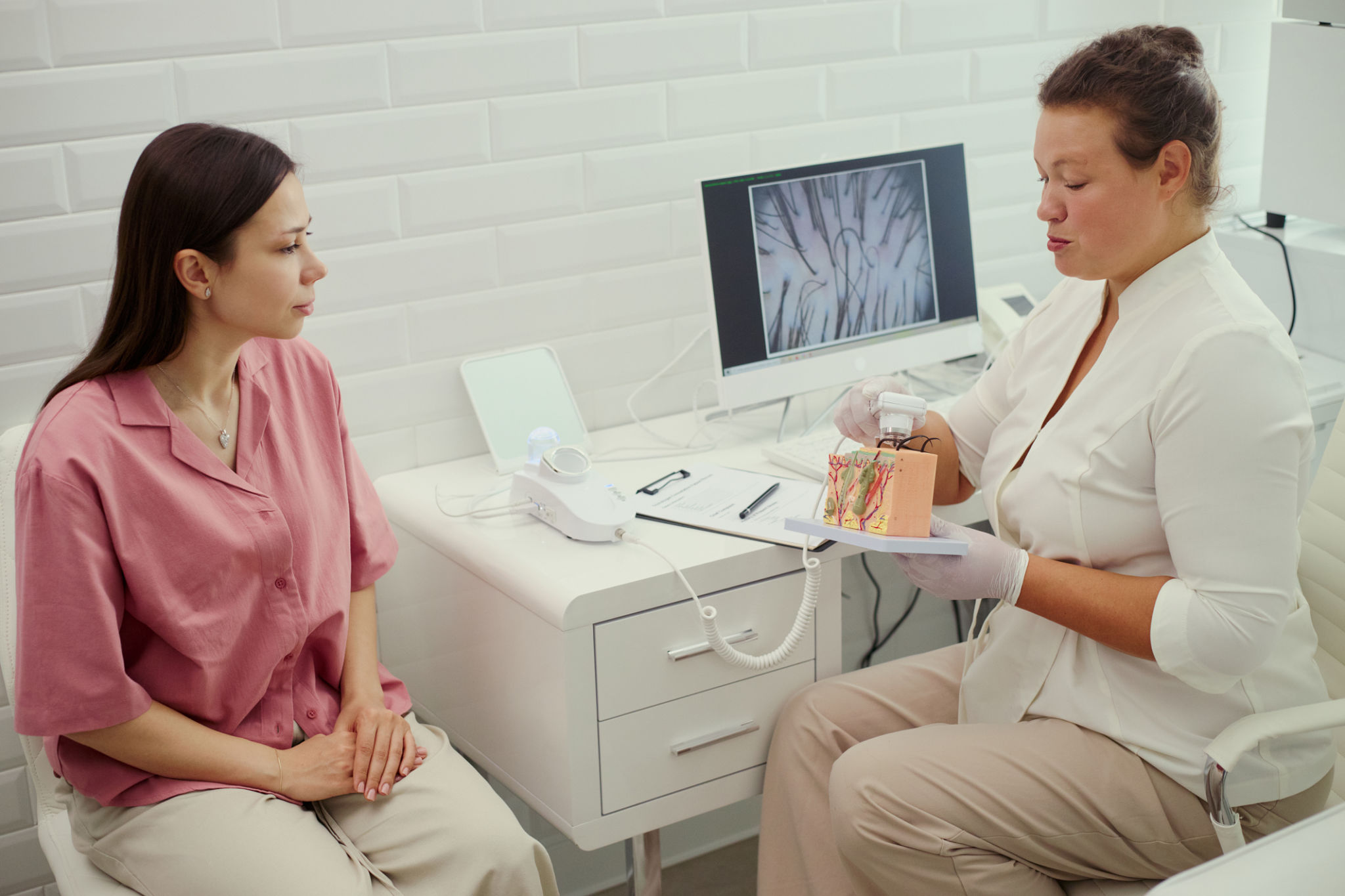
- Ask when the shedding began and whether it is diffuse or localized
- Review the speed and amount of recent weight loss
- Assess protein and overall calorie intake
- Discuss medications, illness, surgery, pregnancy, and stress
- Consider appropriate laboratory testing and a scalp examination
Early evaluation matters because telogen effluvium can coexist with another form of hair loss.
Loose Skin Throughout the Body
Skin expands as body size increases. After substantial weight loss, it may not fully contract—especially when it has been stretched for years or when collagen and elastin have declined with age, smoking, or sun exposure. Common areas include the abdomen, upper arms, thighs, breasts, buttocks, jawline, and neck. GLP-1 medications do not directly create excess skin; they can make preexisting laxity more visible by reducing the volume beneath it.
Facial Restoration Options
Treatment should match the dominant concern: volume loss, skin quality, tissue descent, or a combination.
- Dermal fillers can restore selected areas of volume, but conservative placement is essential after major weight loss
- Autologous fat transfer uses a patient’s own fat to restore broader volume and may be considered once weight is stable
- Collagen-stimulating treatments—including biostimulatory injectables and energy-based devices—may improve skin quality in carefully selected patients
- Facelift or neck-lift surgery may provide the most meaningful improvement when laxity and tissue descent are substantial
More product is not always better. Overfilling cannot reliably correct significant laxity and may distort facial proportions.
Surgical Body Contouring After Weight Loss
When excess skin hangs in folds, causes irritation, limits activity, or remains despite a stable weight, surgery is the only treatment that can remove a substantial amount of tissue.
- Abdominoplasty, or tummy tuck, removes excess abdominal skin and may repair separated muscles
- Brachioplasty removes hanging skin from the upper arms
- Thigh lift reshapes the inner or outer thighs
- Breast lift, reduction, or augmentation addresses post-weight-loss breast changes
- Lower body lift treats the abdomen, flanks, buttocks, and outer thighs circumferentially
- Facelift and neck lift address meaningful facial and neck laxity
Why Weight Stability Matters Before Surgery
Continued weight loss after body contouring can create new laxity, while significant weight gain can compromise the result. Surgeons also evaluate nutrition, smoking status, medical conditions, wound-healing risk, and whether the patient can safely tolerate a long procedure and recovery. Many practices recommend a stable, sustainable weight for several months before elective surgery, but timing should be individualized.
Will the Hair Grow Back?
Telogen effluvium is often temporary once the trigger is corrected. Shedding may last several months, and visible density can take longer to recover because hair grows slowly. Persistent shedding, widening parts, recession, bald patches, scalp symptoms, or loss continuing beyond the expected timeline should prompt evaluation by a dermatologist or other qualified clinician.
Strategies That May Reduce Risk
No strategy can guarantee that facial volume, loose skin, or hair changes will not occur, but supportive habits can reduce avoidable stress on the body.
- Use GLP-1 medication only with appropriate medical supervision
- Avoid unnecessarily rapid weight loss or rushed dose escalation
- Prioritize adequate protein, calories, vitamins, and minerals
- Perform regular resistance training to preserve lean mass
- Protect skin from ultraviolet exposure and avoid smoking
- Treat deficiencies and medical causes of shedding promptly
- Wait for weight stability before making permanent surgical decisions
Myth vs. Fact
Misinformation can turn common post-weight-loss changes into unnecessary fear.
- Myth: Ozempic directly melts facial fat. Fact: facial volume often falls as part of overall weight loss
- Myth: Everyone taking a GLP-1 will lose hair. Fact: hair loss is not universal and may reflect rapid weight loss or another cause
- Myth: Creams can remove substantial loose skin. Fact: topical products may support hydration but cannot excise excess tissue
- Myth: Filler fixes every post-weight-loss face. Fact: significant laxity may require a different or combined approach
- Myth: Surgery should happen as soon as goal weight is reached. Fact: stable weight and medical readiness are important for safety and durability
Questions to Ask Your Provider
A thoughtful consultation should address the whole picture, not only the most visible concern.
- Are my changes more related to volume loss, skin laxity, or both?
- Could another medical or nutritional issue explain my hair shedding?
- Should laboratory testing or a dermatology evaluation come first?
- Has my weight been stable long enough for treatment?
- Which options are likely to produce a meaningful change for my anatomy?
- What are the risks, downtime, and expected longevity?
- Would a staged approach be safer or more natural?
- May I see results from patients with similar post-weight-loss changes?
- What would you advise me not to treat yet?
Final Thoughts
The health benefits of clinically appropriate weight loss can be profound. Changes in the face, skin, body contour, or hair do not erase that achievement. Some improve with time, nutrition, and weight stability; others respond to aesthetic treatment or surgery. The best plan begins with an accurate diagnosis, realistic expectations, and a provider who understands both medical weight management and post-weight-loss anatomy. Medical disclaimer: This article is intended for educational purposes only and is not a substitute for individualized medical advice, diagnosis, or treatment.
Frequently asked questions
What “Ozempic Face” Actually Means: what should readers know?
“Ozempic face” is a popular, nonmedical term used to describe facial changes that can become noticeable after substantial weight loss. It may include hollowing at the temples or cheeks, deeper folds, a less defined jawline, and looser skin around the face and neck. These changes are not unique to Ozempic or even to…
Why Fat Loss Changes the Face So Dramatically: what should readers know?
Facial fat is not simply excess tissue. Distinct fat compartments support the cheeks, temples, lips, jawline, and under-eye area. When body weight falls, these compartments can lose volume. The overlying skin and retaining ligaments may no longer have the same structural support, making normal folds and shadows more…
Does GLP-1 Therapy Age the Skin?: what should readers know?
Current evidence does not show that GLP-1 medications directly accelerate skin aging. A rapid reduction in the fat that previously supported the face can uncover existing collagen loss and laxity, making the face look older even when the medication has not damaged the skin. Age, ultraviolet exposure, smoking,…
Free Download
“Ozempic Face,” Hair Loss, and Loose Skin: What Really Happens After GLP-1 Weight Loss
Save this guide for later — yours to keep, reference, and share.
Near You
Find this service locally
References
- American Academy of Dermatology Association. How Can GLP-1 Drugs Affect My Skin, Hair, and Nails? Updated February 17, 2026.
- American Society of Plastic Surgeons. Body Contouring: Skin Removal After Major Weight Loss.
- American Society of Plastic Surgeons. Body Contouring Candidates.
- American Society of Plastic Surgeons. Body Contouring Risks and Safety.
- GLP-1 Therapies and Hair Loss: A Systematic Review of Current Evidence and Implications for Counseling. PubMed, 2026.
- Ridha Z, Fabi SG, Zubair R, Dayan SH. Decoding the Implications of Glucagon-Like Peptide-1 Receptor Agonists on Accelerated Facial and Skin Aging. Aesthetic Surgery Journal. 2024;44(11):NP809-NP818.
- Persson C, Eaton A, Mayrovitz HN. A Closer Look at the Dermatological Profile of GLP-1 Agonists. Diseases. 2025;13(5):127.
- U.S. Food and Drug Administration. Ozempic (semaglutide) Prescribing Information.
Editorial Disclosure: The content in this article is intended for informational purposes only and does not constitute medical advice, diagnosis, or treatment. Always consult a qualified healthcare provider before beginning any procedure, treatment, or wellness program. Individual results vary. Aledore does not endorse any specific provider, product, or treatment mentioned in this article. Conduct your own research and seek professional guidance before making any health or aesthetic decisions.