Surgical
Back to Work: The Realistic Recovery Timeline After Cosmetic Procedures
One of the most practical questions people ask before a cosmetic procedure has nothing to do with the final result. It is much more immediate: How much time do I actually need to take off work? It sounds like a question that should have a simple answer. Three days. One week. Two weeks. Yet recovery rarely fits neatly into a PTO request. A person can be technically capable of answering emails while still swollen, bruised, uncomfortable, fatigued, restricted from lifting, wearing a compression garment, or simply not ready to walk into a conference room and explain why their face looks different. The point at which you can work, the point at which you feel comfortable being seen at work, and the point at which your body is fully recovered can be three very different dates. That distinction matters more as cosmetic medicine spans an increasingly wide spectrum. “Getting something done” could mean an injectable appointment during a lunch break, an ablative laser treatment that leaves the skin visibly healing for days, an eyelid procedure, a rhinoplasty, breast surgery, liposuction, or a combined operation involving several areas of the body. Even procedures marketed around relatively quick recoveries can require more planning than expected when your occupation involves lifting, bending, standing for long periods, working outdoors, wearing protective equipment, or interacting face-to-face with the public. There is therefore no universal cosmetic-procedure PTO calendar. The American Society of Plastic Surgeons (ASPS) emphasizes that recovery depends on the procedure as well as factors such as baseline health, activity level, postoperative nutrition and adherence to aftercare. The goal of this guide is not to replace the instructions of the clinician performing your procedure. Instead, it is to give you a more realistic framework for thinking about recovery before you submit the PTO request, schedule the flight, arrange childcare, promise to attend a wedding, or tell your boss that you will definitely be back Monday morning.
Stay Informed
A better inbox starts here.
Get thoughtful beauty and wellness guidance from the Aledore Journal.
Find Locally
Find trusted providers near you
The First Recovery Timeline Isn't Medical—It's Your Calendar
People often begin planning a cosmetic procedure by asking how long the procedure takes. For work planning, that may be one of the least important numbers. A procedure that takes an hour can produce a recovery lasting days or weeks, while another treatment may allow someone to resume ordinary activities almost immediately. What matters is what happens after you leave the treatment room or operating room.
A useful way to think about recovery is as several overlapping timelines. There is the medical recovery, during which incisions, tissues or treated skin are actively healing. There is a functional recovery, when you are capable of completing ordinary tasks. There is an occupational recovery, when you can safely perform the specific duties required by your job. Finally, there is a social recovery, when swelling, bruising, peeling, dressings or other visible signs have subsided enough that you personally feel comfortable being seen.
Those timelines do not necessarily end together.
Consider facial surgery. Someone recovering from a facelift may feel substantially better by the second week and be capable of working at a computer, yet still have residual swelling, bruising, tightness or numbness. ASPS describes days 7–14 as a period when swelling and bruising may remain, while many patients begin feeling ready to return to work toward the end of that second week. Healing continues afterward. That person may therefore be functionally ready for work before feeling socially ready for an important presentation or a room full of clients.
The reverse can happen with body procedures. Clothing may conceal swelling and compression garments remarkably well, making someone appear recovered before their physical restrictions have ended. ASPS notes this difference when discussing return to work after plastic surgery: visible facial bruising and swelling can persist for weeks, whereas signs of body surgery may sometimes be easier to conceal beneath clothing. Looking normal, however, does not mean internal tissues have finished healing or that heavy lifting is safe.
This is why asking your surgeon, “When can I go back to work?” is only the beginning. A better conversation is: I do this particular kind of work. I lift this amount. I stand this long. I commute this far. I wear this equipment. When can I safely perform those duties?
That produces a much more useful answer.
Your Job May Matter Almost as Much as Your Procedure
Imagine four people undergoing exactly the same cosmetic procedure.
The first works remotely from a laptop. The second sits at a reception desk but interacts with customers all day. The third is a hairstylist who stands for eight hours with their arms elevated. The fourth works in a hospital and may need to reposition patients.
Calling all four jobs simply “work” ignores enormous differences in physical demand.
A remote employee may be able to work while some bruising remains because coworkers see only a small video window—or perhaps no camera at all. An office employee may have similarly light physical demands but care much more about facial swelling because of frequent meetings. Someone working in retail or hospitality may spend an entire shift standing. A healthcare worker, warehouse employee, construction worker or fitness professional may have lifting requirements that make returning substantially more complicated.
This becomes particularly important after procedures where return to desk work precedes return to unrestricted physical activity. Cleveland Clinic, for example, says many people undergoing liposuction can return to work within a few days, while normal physical activity can take substantially longer; it notes that regular exercise may not resume until around six weeks in some recoveries. Someone who writes reports at a desk and someone whose job involves repeatedly lifting heavy objects should therefore not use the same “return to work” number.
Rhinoplasty illustrates the same problem from another angle. Cleveland Clinic says patients may generally return to work or school in roughly one to two weeks, but light exercise may not resume until four to six weeks, and heavy lifting is also restricted for approximately four to six weeks. A person whose occupation itself resembles exercise cannot reasonably interpret “back to work” as meaning “back to unrestricted activity.”
Then there are jobs in which accidental impact is a realistic possibility. A teacher working with small children, veterinary professional handling animals, athlete, coach, healthcare worker or anyone working in a crowded physical environment may have considerations that an accountant working from home does not. After rhinoplasty, protecting the nose from impact is particularly important during early healing.
The practical lesson is simple but important: choose your recovery estimate based on the demands of your actual job, not merely the procedure name.
The “No Downtime” Procedures That Can Still Affect Your Workday
At the lightest end of the cosmetic-treatment spectrum are procedures commonly described as having minimal or little downtime. That description can be accurate, but it is frequently misunderstood. “No downtime” generally does not promise “no visible evidence that you had a procedure.”
Nonsurgical cosmetic treatments can produce temporary redness, tenderness, swelling, bruising or other effects without making someone medically incapable of working. This is where the difference between occupational and social downtime becomes especially relevant. Someone working remotely may barely care about a small bruise. Someone having professional headshots the following morning may care considerably more.
The lesson for injectable and minimally invasive treatments is therefore not necessarily to schedule several days away from work. It is to think about what is happening at work immediately afterward. If the next day includes a wedding, televised appearance, photography session, major presentation or another event where even temporary swelling would be unwelcome, giving yourself a buffer can be more sensible than relying on the most optimistic recovery scenario.
This principle becomes even more important as treatments become more aggressive.
Chemical Peels: “A Peel” Can Mean Very Different Recoveries
Few cosmetic-treatment names hide as much variation as chemical peel. Two people can truthfully say they had a chemical peel while experiencing dramatically different recoveries.
Chemical peels are commonly categorized by depth, and depth matters enormously when planning work. ASPS separates recovery guidance into light, medium and deep chemical peels rather than treating them as a single procedure. That distinction is essential because removing or injuring more superficial layers of skin is fundamentally different from performing a deeper resurfacing treatment.
A superficial treatment may be compatible with someone's normal schedule even if dryness, flaking or mild redness develops. As peel depth increases, however, visible healing becomes a larger part of the equation. Someone may be physically capable of typing at a computer but have peeling, crusting or redness that makes public-facing work uncomfortable.
A deep chemical peel belongs in an entirely different planning category. ASPS says patients undergoing a deep peel may typically return to work and some normal activities at around two weeks, while redness can remain much longer—even after the initial swelling has subsided. That is an excellent example of why “downtime” and “complete recovery” should not be used interchangeably.
For work planning, then, asking “How much downtime does a chemical peel have?” isn't specific enough. You need to know what kind of peel, what depth, what area is being treated, what the expected visible healing will look like, and what your work requires you to look like while doing it.
If a treatment is being scheduled immediately before an important event because someone heard that “peels have no downtime,” the problem may not be the procedure. The problem may be the assumption.
Laser Resurfacing: When Being Able to Work Isn't the Same as Wanting to Be at Work
Laser resurfacing is another area where the word laser alone tells you surprisingly little about recovery. Different devices, wavelengths, treatment depths and settings can produce very different healing experiences. Even within broadly familiar categories such as CO2 and erbium resurfacing, treatment intensity matters.
ASPS describes a range of post-resurfacing skin responses extending from relatively normal appearance to redness, flaking, blistering or scabbing, depending on the treatment. With laser resurfacing specifically, ASPS notes that treated skin may feel like a sunburn, with redness, swelling, itching or stinging. More aggressive resurfacing can result in raw or oozing skin and crust formation, with peeling commonly developing around five days to a week afterward.
That makes laser recovery especially relevant for anyone in a public-facing occupation. You may not be bedridden. You may not even feel particularly sick. But you may have to perform wound or skin care multiple times throughout the day, avoid sun exposure carefully, manage swelling and accept that your face looks visibly treated.
ASPS gives broad recovery estimates of up to approximately two weeks for CO2 laser resurfacing and about one full week for erbium resurfacing, while also noting that pinkness can persist considerably longer after the surface has healed. Those numbers shouldn't be converted into rigid promises because laser parameters vary substantially. They are better understood as evidence that resurfacing should be planned according to the exact treatment—not according to a generic internet claim that “laser has a few days of downtime.”
For someone who works remotely, this may be relatively easy to accommodate. For someone whose occupation involves being outdoors, recovery introduces another issue: sun protection becomes particularly important as newly resurfaced skin heals. For someone who works directly with customers, the visible recovery may determine PTO more than discomfort does.
This is one of the central themes of cosmetic recovery: your body may permit you to work before your lifestyle makes returning desirable.
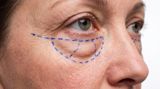
Blepharoplasty: A Small Surgical Area With a Very Visible Recovery
Eyelid surgery can sound deceptively minor because the treatment area is small. But the eyes occupy one of the most visually prominent areas of the face, so even a relatively localized procedure can have an outsized effect on social downtime.
Blepharoplasty may involve the upper eyelids, lower eyelids or both. The exact technique also matters. Cleveland Clinic notes that upper-eyelid sutures commonly remain for around a week and that swelling and bruising are common after surgery. It advises expecting to stay home from work and limit activities for several days while the eyelids heal.
Here again, occupation and personal comfort change the answer. A person working remotely may feel ready to handle emails surprisingly early. Someone who meets clients face-to-face may prefer to wait until bruising has improved. Someone who works outdoors may need to think carefully about sun and environmental exposure. And someone whose job involves significant physical exertion needs specific postoperative guidance rather than assuming that feeling good means restrictions have ended.
This is also where cosmetic recovery becomes psychologically interesting. People often judge readiness by pain: If it doesn't hurt anymore, I must be recovered. But pain is only one signal. Swelling, tissue healing, incision integrity and activity restrictions may remain relevant after discomfort has become manageable.
The better question is not “When will I stop hurting?” It is “When will my surgeon consider me safe to resume the specific activities my job requires?”
Brow Lift: Approximately Two Weeks Can Mean “Presentable,” Not “Finished”
A brow lift offers an especially clear illustration of the difference between returning to normal life and completing the healing process.
ASPS states that initial wound healing may take approximately 10–14 days and that patients may be ready to return to work and normal activity around that period. Yet it also explains that healing continues for several weeks as swelling resolves and incision lines refine, with complete recovery potentially extending for months.
Those statements are not contradictory. They describe different phases of the same recovery.
This is why the phrase “recovery time” can create unrealistic expectations. If someone hears “two-week recovery,” they may imagine that day 14 represents the end of healing. In reality, it may represent the transition from obvious postoperative recovery into a much longer period of subtle healing.
That distinction becomes increasingly important as we move from minimally invasive treatments into larger facial and body surgeries.
Rhinoplasty: The One-Week Vacation May Not Tell the Whole Story
Rhinoplasty is one of the clearest examples of why a return-to-work date should be separated from a final-recovery date.
The nose is centrally positioned on the face, postoperative swelling can be obvious, and early recovery can involve a splint or dressing. Cleveland Clinic advises planning to miss work, school and other commitments during the first week, when swelling and soreness are expected. Its broader clinical guidance says many people can return to work or school in approximately one to two weeks.
But that does not mean the nose is finished healing.
Cleveland Clinic notes that swelling can continue for months and that final healing may take around a year. It also recommends avoiding heavy lifting for roughly four to six weeks and following the surgeon's individualized instructions before resuming regular activities. ASPS likewise emphasizes that the early postoperative period includes swelling and bruising and that return to routine varies among patients; people with strenuous occupations can require longer before returning.
So consider the difference between an attorney working remotely and a warehouse employee after the same operation. The attorney might be capable of working from home before feeling comfortable appearing in court. The warehouse employee may look perfectly presentable before being cleared for the lifting required at work. Their operations were identical; their occupational recovery timelines are not.
There is another issue unique to highly visible facial surgery: people often schedule their PTO around when they expect to feel normal, when they should also consider when they expect to look comfortable in their particular environment. Neither consideration is superficial. If your occupation depends on public appearances, meetings, camera work or face-to-face client interaction, visible recovery is a legitimate part of planning.
Building a little extra time into the calendar can also remove the pressure to heal according to a deadline. Bodies do not know that you promised your manager you would be back at 8 a.m. Monday.
Facelift and Neck Lift: Returning to the Office Before the Final Result
Facelift recovery demonstrates perhaps better than almost any procedure why cosmetic surgery cannot be summarized by a single “downtime” number.
During the early days, swelling, bruising and discomfort are expected. ASPS describes days 4–6 as a period when many people become more comfortable moving around and may begin light household activity. During days 7–14, swelling and bruising may still be present, along with sensations such as tightness, tingling or numbness. By the end of the second week, many patients begin feeling like themselves and are ready to return to work and light activity.
Yet weeks three and four can still include residual swelling and tightness. The facelift recovery process therefore doesn't abruptly end when someone goes back to work.
This is particularly relevant when someone combines a facelift with other procedures. A neck lift, blepharoplasty, brow lift, fat grafting or resurfacing treatment may be performed as part of the same overall surgical plan. Once procedures are combined, it becomes less useful to search for the recovery time of each component independently and assume that the shortest number applies.
Your surgeon needs to explain the recovery expectations for your combined operation.
For a patient with an office job, roughly two weeks may sometimes represent a reasonable point at which returning becomes possible. For someone who is constantly in front of clients or cameras, social downtime may influence the decision to wait longer. For a physically demanding occupation, medical restrictions can be the limiting factor instead.
And none of those scenarios should be interpreted as evidence that one person is “healing better” than another. They simply have different definitions of what being back at work requires.
Breast Augmentation: Desk Work Can Return Before the Gym—and Before Heavy Work
Breast augmentation is a particularly useful example because it exposes a common mistake in online recovery advice: taking a recommendation intended for office workers and applying it to everyone.
ASPS reports that many patients can return to a desk job around one week after breast augmentation, with the first several days often being the most uncomfortable portion of early recovery. Another ASPS discussion similarly describes approximately a week as enough for many patients to return to office work, while exercise requires a more gradual return.
The words desk job matter.
A receptionist who spends most of the day seated is not placing the same demands on the healing chest as someone who lifts inventory, transfers patients, grooms animals, works construction, performs massage, styles hair with their arms elevated for hours, or teaches strength training.
This means that someone can truthfully say, “I went back to work a week after breast augmentation,” while another person with the same operation may appropriately require more time or modified duties. Neither experience establishes a universal rule.
The surgical technique can also influence recovery. Implant position, incision location, whether other breast procedures are performed at the same time and the individual's response to surgery can all change the experience. A breast augmentation alone should not automatically be treated as equivalent to augmentation combined with a breast lift.
This is exactly why a surgeon should hear a concrete description of your job before giving you a return date. “I'm a nurse and may need to help move patients” gives the clinician far more useful information than “I work at a hospital.”
Liposuction: Feeling Better Quickly Doesn't Mean the Swelling Is Gone
Liposuction is frequently associated with relatively rapid return to ordinary life, but the recovery story is more complicated than the phrase “a few days.”
Cleveland Clinic says many patients can return to work within a few days after outpatient liposuction and may feel substantially more like themselves around two weeks. At the same time, returning to regular physical exercise can take approximately six weeks, and complete healing and resolution of swelling can extend much longer.
Once again, multiple recovery clocks are running simultaneously.
You might be able to answer emails.
You might be able to walk around the office.
You might still be wearing compression garments.
You might still have significant swelling.
And you might not yet be cleared for the strenuous activity your normal occupation demands.
The amount and location of liposuction matter as well. Treating a relatively limited area is not automatically comparable to extensive circumferential liposuction involving several regions. Cleveland Clinic specifically notes that recovery varies according to factors such as the area treated and amount of fat removed.
Liposculpture guidance reflects similar variability: Cleveland Clinic reports that some people return to work after several days to a week, others require two weeks or longer, and strenuous activity may remain restricted for approximately three to six weeks depending on the extent of treatment.
That variability should be built into the PTO conversation rather than treated as an inconvenience.
The Recovery Mistake People Make Before Surgery
One of the easiest mistakes to make is scheduling the minimum conceivable downtime rather than the reasonable recovery window.
Suppose a procedure is commonly associated with a return to office work somewhere around one to two weeks. A patient might schedule exactly seven days off because they found one person online who returned on day seven. Technically, that outcome may be possible. But the schedule leaves no room for additional swelling, nausea from medication, constipation after anesthesia, fatigue, a slower-than-expected first few days, an uncomfortable commute, a follow-up appointment, or simply being someone whose body needs more time.
Recovery is not a contest.
Returning to work earlier does not prove that a procedure went better, and needing additional time does not automatically indicate that something has gone wrong. ASPS specifically cautions that recovery varies by procedure and individual factors, and postoperative instructions from the treating surgeon should remain the primary guide.
For elective procedures, there is a practical advantage to planning conservatively when your circumstances allow it. Returning earlier than expected because you feel great is usually a much easier problem to manage than discovering on Sunday evening that you are nowhere near ready for Monday morning.
Think in Terms of “Return to Work” and “Return to Duty”
A useful distinction—particularly for physically demanding occupations—is between return to work and return to full duty.
A person may be capable of returning to the workplace while still needing restrictions. That might mean avoiding lifting, strenuous activity, bending, certain repetitive arm movements, outdoor exposure or anything that places excessive stress on the treated area.
For someone with a flexible employer, modified duties can dramatically change the amount of PTO needed. A worker might return earlier if temporarily assigned administrative tasks. Remote work can sometimes bridge the period between being functional and being ready for the normal workplace. Someone whose job cannot be modified may have to remain away longer.
This is particularly relevant for people in healthcare, fitness, construction, warehousing, hospitality, childcare, beauty services and other occupations that are often mislabeled as simply “standing jobs.” Many involve considerably more than standing.
Before surgery, tell your clinician what you actually do during a normal shift. If you lift, say approximately how much. If you repeatedly bend or squat, say so. If you work outdoors, mention it. If you wear a tight uniform or protective equipment over the treatment area, mention that. If you cannot take breaks whenever you need them, mention that too.
The more accurately the clinician understands your work, the more useful the return-to-work guidance can become.
PTO Should Include the Procedure Day—But Planning Should Start Before It
Another overlooked issue is that recovery logistics begin before the procedure itself. Depending on the treatment and anesthesia, patients may need transportation home, assistance during the first night, prescription pickup, postoperative supplies, childcare arrangements and help with ordinary household responsibilities.
Someone can have enough PTO and still have a poorly planned recovery.
If your procedure involves anesthesia or significant sedation, your clinical team will provide specific restrictions about driving and supervision. Those instructions should be arranged before procedure day rather than improvised afterward. Likewise, if you live alone, have small children, care for another adult or have pets that require lifting or strenuous handling, those responsibilities belong in the recovery plan.
Your job is only one part of your workload.
A parent who takes ten days away from the office but spends those ten days lifting a toddler has not necessarily created ten days of physical rest. Someone who schedules surgery on Friday and assumes the weekend will be sufficient may discover that Saturday and Sunday are actually the most demanding portion of early recovery.
Recovery planning therefore works best when you look at your whole life, not merely your work calendar.
Your Surgeon Gives the Clearance—Not the Calendar
Recovery guides are useful because they help patients plan. They become dangerous when generalized timelines are interpreted as individualized medical clearance.
A person reading that many rhinoplasty patients return to work in one or two weeks should not conclude that they personally are cleared on day 10. Someone reading that office workers often return around a week after breast augmentation should not use that statement to override lifting restrictions from their surgeon. Someone who feels unusually good after liposuction should not assume that swelling, compression requirements or exercise restrictions no longer matter.
Your treating clinician knows the operation performed, the techniques used, your health history, how your early healing looks and whether there were factors that should modify the standard recovery plan.
ASPS emphasizes following the surgeon's postoperative instructions regarding medication, incision care, compression garments and return to exercise. Cleveland Clinic similarly frames return to activity after rhinoplasty around the healthcare provider's recommendations rather than a universal calendar date.
A recovery timeline should therefore be used to answer:
“Approximately how should I plan my life?”
It should not be used to declare:
“I am medically cleared because today is day seven.”
Those are very different statements.
Larger Procedures Require a Bigger Planning Conversation
So far, we have moved from minimally invasive treatments through facial surgery, breast augmentation and liposuction. But some cosmetic operations require substantially more recovery planning—not necessarily because every patient experiences a difficult recovery, but because the procedures involve larger treatment areas, more extensive tissue healing or restrictions that can collide directly with ordinary work and home responsibilities.
That includes tummy tuck, breast lift and reduction, more extensive body contouring, fat transfer and BBL procedures, mommy makeovers and combinations of multiple operations. Hair transplantation introduces a different kind of recovery question: someone may feel capable of working relatively quickly while still having visible signs of the procedure and strict instructions for protecting newly transplanted grafts.
Those procedures deserve more than a generic number. The same planning framework becomes even more important for tummy tuck, breast lift and reduction, BBL and fat transfer, mommy makeovers, combined procedures and hair transplantation—especially when work, childcare, travel and visible recovery overlap.
Tummy Tuck: Why “Back to Work” Depends Heavily on What You Do for Work
Abdominoplasty, commonly called a tummy tuck, is not simply a larger version of liposuction. During the operation, excess skin is removed from the abdomen, and the surgeon may also tighten weakened or separated abdominal muscles. Liposuction may be incorporated into the operation as well. Because the procedure affects an area involved in standing upright, bending, twisting, lifting and stabilizing the body, recovery can influence activities that patients rarely think about until those activities become difficult.
ASPS notes that tummy-tuck patients generally need assistance during the first days after surgery and that physical activity is significantly limited during early recovery. Depending on the operation and occupation, many people need roughly two to four weeks away from work, with physically strenuous occupations potentially requiring longer before full duties are appropriate. The individual surgeon's restrictions remain more important than a generalized timeline.
Early recovery is often less about staying completely still and more about finding the balance between appropriate movement and protecting healing tissues. Surgeons generally encourage postoperative walking because movement is important during recovery, but walking around the house is very different from returning to an eight- or twelve-hour shift. A person may also initially find it uncomfortable to stand completely upright because of tension across the abdomen.
That distinction matters when someone hears that another patient was “back at work after two weeks.” What kind of work?
A person who works remotely may be able to gradually resume computer work considerably earlier than someone who works in a warehouse. An office employee may return while still modifying how frequently they get up and move. A nurse, hairstylist, restaurant worker, construction worker, fitness professional or parent caring for small children may face a much more complicated return because their normal day involves lifting, prolonged standing, bending or repetitive physical activity.
The recovery calendar should therefore have at least two milestones: return to work and return to unrestricted duty.
Those dates may be weeks apart.
Breast Lift and Breast Reduction: Don't Judge Recovery by Incision Size Alone
Breast lift and breast reduction recovery can overlap with breast augmentation recovery, but these procedures should not automatically be treated as interchangeable.
A breast lift, or mastopexy, reshapes and elevates the breast by removing excess skin and repositioning breast tissue and the nipple-areola complex. A breast reduction removes breast tissue, fat and skin in addition to reshaping the breast. Incision patterns vary according to the technique and amount of correction required.
ASPS describes breast-reduction recovery as involving postoperative dressings and often a support bra, with temporary swelling and bruising expected. Patients receive specific instructions regarding incision care, medication, activity and follow-up. ASPS breast reduction recovery guidance
For someone with a sedentary occupation, returning to work may occur considerably before unrestricted exercise or heavy lifting. But once again, the phrase desk job needs to be taken seriously.
Think about a dental hygienist leaning forward and working with their arms throughout the day. Think about a hairstylist shampooing clients and holding tools with their arms elevated. Think about a nurse repositioning a patient. Think about a restaurant employee carrying trays or boxes.
These occupations place very different demands on the chest and upper body than sitting at a computer.
Patients also need to consider the possibility of postoperative fatigue. Surgery is a physiologic stressor. Feeling tired during early recovery does not necessarily mean something is wrong, and being able to stay awake for a few hours at home does not guarantee that an entire workday will feel comfortable.
If possible, a gradual transition—remote work, shorter days or temporarily modified responsibilities—can sometimes provide a bridge between being home full-time and resuming normal duties.
BBL and Fat Transfer: The Problem Isn't Only Pain—It's Pressure
Fat transfer procedures create a particularly interesting return-to-work challenge because recovery involves both the areas from which fat was harvested and the area receiving transferred fat.
With a Brazilian butt lift, or gluteal fat grafting, liposuction is performed to obtain fat, which is then processed and transferred into the buttocks. This means the patient is simultaneously recovering from liposuction and protecting a grafted area.
That can make an ordinary desk job unexpectedly complicated.
Sitting is normally considered one of the least physically demanding things a person can do at work. After gluteal fat transfer, however, prolonged direct pressure on the treated area can conflict with postoperative restrictions. ASPS advises that patients may need to avoid prolonged sitting for approximately two weeks or longer except for essential activities, with the exact restrictions determined by the surgeon and technique used. ASPS buttock enhancement recovery information
That means someone can feel surprisingly mobile while still being unable to return comfortably to an eight-hour seated workday.
This is another reason not to assume that remote work automatically solves every recovery problem. Working from home eliminates commuting and allows more privacy, but if the postoperative instructions limit sitting, a laptop and couch do not make those instructions disappear.
Gluteal fat grafting also deserves an additional safety discussion. The procedure has historically carried serious risks, including fat embolism, and professional plastic-surgery organizations have supported safety measures intended to reduce those risks. Anyone considering BBL surgery should seek an appropriately trained, credentialed surgeon operating in an appropriate surgical setting and have a detailed discussion about technique and safety—not choose a procedure or surgeon based primarily on price or promises of an unusually rapid recovery.
Liposuction Plus Fat Transfer: Two Recovery Sites, One Body
Fat transfer to areas other than the buttocks creates a similar issue on a smaller or different scale. The patient has a donor site and a recipient site, and each may have different instructions.
The liposuction area may be swollen, bruised and compressed while the transferred-fat area is being protected. Depending on the location and extent of the procedure, someone might feel comfortable enough for light work relatively quickly while still experiencing swelling that evolves over several weeks.
This is one reason cosmetic-surgery timelines become less reliable when procedures are combined. If someone undergoes liposuction alone, one recovery estimate may be reasonable. Add substantial fat transfer, and the postoperative requirements can change. Add breast surgery or abdominal surgery, and the plan changes again.
The recovery time for a combination operation should come from the surgeon performing that combination, rather than by looking up each procedure separately and choosing whichever one has the shortest downtime.
Mommy Makeover: Stop Thinking of It as One Procedure
“Mommy makeover” is a convenient marketing term, but medically it does not describe one standardized operation.
One patient may undergo breast augmentation and limited liposuction. Another may undergo abdominoplasty, extensive liposuction and breast lift. Another may have breast reduction combined with abdominal surgery. Their recovery requirements can be substantially different despite all three procedures being described by the same phrase.
This is where online recovery estimates become particularly unreliable.
If an operation combines abdominal and breast surgery, the patient may have restrictions affecting both the core and upper body simultaneously. Ordinary activities—getting out of bed, opening a heavy door, carrying groceries, lifting children, reaching for objects or pulling clothing over the head—can suddenly require more effort than anticipated.
ASPS describes mommy-makeover recovery as dependent on the specific procedures performed and notes that patients receive individualized instructions regarding incision care, medications, activity and follow-up. ASPS mommy makeover recovery information
For work planning, this means you should not ask only, “How long is mommy-makeover recovery?”
Ask:
Which procedures am I actually having, and which one will determine my longest restriction?
That second question is much more useful.
The Childcare Problem Deserves Its Own Recovery Plan
One of the most overlooked issues after body surgery is childcare.
A patient may arrange two or three weeks away from paid employment and assume that this constitutes adequate recovery time. But caring for an infant or toddler can involve lifting repeatedly throughout the day, carrying a child upstairs, getting them into a car seat, bending over a crib, pushing a stroller, carrying diaper bags and responding quickly when something happens.
Being off work therefore does not necessarily mean being off physical duty.
This needs to be discussed with the surgeon before surgery. If postoperative lifting restrictions prevent someone from safely lifting their child, another adult may need to assume those responsibilities longer than the patient initially expected.
The same principle applies to caregiving for an older relative and even to certain pets. A 70-pound dog pulling suddenly on a leash does not care that its owner had abdominal surgery last week.
Planning assistance is part of recovery planning.
Hair Transplantation: You May Feel Fine Before You Look Untreated
Hair transplantation occupies an unusual position on the downtime spectrum.
Compared with major body surgery, many patients are physically capable of relatively normal light activities quickly. But social downtime can be much longer than functional downtime because the scalp may visibly reveal that something has been done.
Modern hair transplantation is generally performed using either follicular unit extraction (FUE), in which individual follicular units are harvested, or follicular unit transplantation (FUT), in which a strip of scalp is removed and follicles are subsequently prepared for transplantation. The procedures create thousands of tiny recipient sites where grafts must be protected during early healing.
The first days therefore matter even if the patient feels relatively good.
The American Academy of Dermatology explains that hair-transplant patients receive specific postoperative instructions and that transplanted hair commonly sheds after surgery before new growth develops. Results evolve over months rather than days.
Someone working remotely may be capable of returning to computer work quickly. Someone working publicly may prefer additional time because of redness, crusting, swelling, a visible donor area or changes in hairstyle.
Hair transplantation also illustrates why return to work and return of the final appearance are completely unrelated milestones. A person can return to work long before the transplanted follicles begin producing the cosmetic result they sought.
Cosmetic Surgery and Working From Home: Helpful, but Not a Loophole
Remote work has changed cosmetic-procedure recovery in a meaningful way.
For some patients, it can reduce the amount of formal PTO needed. There is no commute. Clothing can be more comfortable. Breaks may be easier. Minor bruising can be concealed by turning off a camera. Someone recovering from facial surgery may feel comfortable answering emails before wanting to sit across from colleagues in person.
Those are genuine advantages.
But working remotely should not be treated as a way to circumvent medical recovery.
If the body needs rest, it still needs rest. If pain medication makes concentration difficult, an eight-hour workday may not be realistic. If the surgeon requires frequent walking, wound care, compression-garment management or positioning restrictions, those requirements remain in place at home.
There is also a cognitive side to postoperative recovery that receives less attention than bruising and swelling. Anesthesia, poor sleep, discomfort and certain medications can temporarily affect concentration and energy. Someone whose work involves complex financial decisions, operating equipment, clinical judgment or other safety-sensitive tasks needs to consider more than whether they can physically sit in front of a computer.
Working from home can be a transition tool. It should not become pressure to prove that surgery requires no recovery.
“I Can Hide It on Zoom” Isn't the Same as Being Recovered
Social recovery has become more complicated in the era of remote work because someone can appear relatively normal from the shoulders up while recovering from significant body surgery.
That can create unrealistic expectations.
A coworker may see someone smiling on a video call and assume they are fully recovered. Off camera, that person may be wearing a compression garment, managing swelling, walking carefully and taking frequent breaks.
This is worth remembering both for patients and employers. Cosmetic surgery is still surgery when it is elective.
The fact that a procedure was chosen rather than medically required does not change basic wound healing.
Combining Procedures Can Save One Recovery Period—but Make That Recovery More Demanding
One appeal of combining cosmetic procedures is obvious: instead of undergoing several separate operations with separate recovery periods, selected patients may be able to address multiple areas during one surgical episode.
But combining procedures does not simply combine the benefits. It can also increase the physiologic demands of surgery and complicate recovery.
Operation length, anesthesia exposure, number of surgical sites, blood loss, mobility and individual medical risk all matter. Whether procedures can safely be combined is therefore a clinical decision, not merely a scheduling preference.
From a work perspective, the mistake is assuming:
“If breast surgery takes approximately X and abdominal surgery takes approximately Y, I'll just take whichever recovery is shorter.”
The opposite mindset is safer for planning. Assume the more restrictive component may control the early recovery—and ask whether the combination itself changes the surgeon's recommendation.
If you are considering several procedures primarily because you cannot take time off work twice, tell your surgeon that. It is relevant information. It does not mean the procedures should automatically be combined.
Surgery Tourism: Don't Make the Return Flight Your Recovery Deadline
Traveling for cosmetic surgery introduces another clock into recovery: the departure date.
A patient undergoing surgery close to home can usually return for follow-up appointments without boarding an airplane. Someone traveling to another state or country may have flights, hotels, ground transportation and luggage to manage while still healing.
Long-distance travel also introduces concerns about prolonged immobility. Surgery itself can increase the risk of venous thromboembolism in susceptible patients, and extended periods of immobility can compound that concern. The CDC identifies recent surgery as one factor associated with increased risk of travel-related blood clots and recommends that higher-risk travelers discuss preventive measures with a healthcare professional.
This is not a reason to assume that nobody can travel after surgery. It is a reason the return flight should be discussed with the surgeon before purchasing a restrictive ticket.
The surgeon should know how long the flight is, when it is scheduled relative to surgery and whether there are individual risk factors that change the plan.
The cheapest airfare is not useful if it forces you onto an airplane before your surgeon wants you there.
When You're Traveling for Surgery, Follow-Up Care Matters Too
The operation is only one part of surgical care.
Postoperative appointments may involve checking incisions, evaluating swelling, removing certain sutures or drains when applicable, assessing healing and responding to unexpected concerns. Patients traveling far from the surgeon should understand exactly how postoperative care will work once they return home.
Ask who you contact after hours. Ask how urgent concerns will be evaluated. Ask whether the surgeon expects you to remain locally for a certain period. Ask what happens if you are not medically ready to travel on the planned departure date.
These questions become particularly important for international cosmetic surgery. Cost matters, but continuity of care matters too.
A recovery calendar should never be so rigid that a patient feels forced to travel because a hotel reservation is ending.
How Much PTO Should You Actually Request?
The most useful strategy is to stop looking for one universal number.
Instead, start with the expected recovery range for the exact procedure and then apply your personal circumstances to it.
A rough planning framework looks something like this:
- **Minimally invasive injectables:** Often little/no formal PTO. Bruising/swelling can create social downtime
- **Light peel:** Often minimal. Peeling/redness varies
- **Deeper resurfacing:** Several days to ~2+ weeks depending on treatment. Visible healing can outlast functional downtime
- **Blepharoplasty:** Often around 1–2 weeks socially. Bruising/swelling may remain
- **Rhinoplasty:** Often around 1–2 weeks for work/school. Swelling continues for months; activity restrictions last longer
- **Facelift/neck lift:** Often around 2 weeks or more. Social downtime varies substantially
- **Breast augmentation:** Many desk workers around 1 week. Physical jobs can require longer
- **Liposuction:** Several days to 1–2+ weeks depending on extent. Compression/swelling and exercise restrictions continue
- **Tummy tuck:** Commonly several weeks. Heavy/manual work may require substantially longer
- **Breast lift/reduction:** Often several weeks depending on job/procedure. Upper-body restrictions can affect work
- **BBL/fat transfer:** Highly technique- and job-dependent. Sitting/pressure restrictions can complicate desk work
- **Mommy makeover:** Often several weeks. Combination determines recovery
- **Hair transplant:** Often relatively quick functional return. Visible/social recovery may take longer
*These are planning concepts, not medical clearance dates. Procedure extent, technique, complications, individual health, surgeon protocol and occupational demands can substantially change the timeline.
The most important column is actually the last one.
That is where real life lives.
Build a Recovery Buffer Instead of Planning to the Earliest Possible Date
If your surgeon tells you that patients with your procedure and occupation often return somewhere between two and three weeks, and your circumstances allow three weeks, scheduling only fourteen days because that is technically the beginning of the range gives you very little flexibility.
Recovery is probabilistic.
You do not know in advance exactly how much you will swell. You do not know exactly how fatigued you will feel. You do not know whether your commute will be uncomfortable. You do not know whether you will still need a garment that does not cooperate with your work clothes.
Planning a buffer does not mean expecting complications. It means acknowledging normal biological variation.
If you recover faster than expected, having extra time is a pleasant surprise.
If you schedule the absolute minimum and need another week, the recovery itself can become stressful.
You Don't Necessarily Have to Tell Everyone What Procedure You're Having
For many patients, another source of anxiety is not physical recovery at all. It is explaining the absence.
People may be comfortable telling coworkers that they are having surgery but not comfortable discussing cosmetic surgery specifically. Others may prefer to keep the entire medical situation private.
The amount of information that must be disclosed to an employer depends on the circumstances, workplace policies and whether someone is requesting particular medical leave or accommodations. In the United States, medical information and employment protections can involve laws including the Family and Medical Leave Act and Americans with Disabilities Act, although elective cosmetic procedures are not automatically protected simply because they are medical procedures. Eligibility depends on the specific situation.
The U.S. Department of Labor explains that FMLA protections apply to eligible employees and qualifying serious health conditions under defined circumstances.
If leave protection matters, rely on your employer's HR department and appropriate legal or professional guidance rather than assuming that cosmetic surgery automatically qualifies—or automatically does not.
From a social standpoint, however, you generally do not owe curious coworkers a detailed explanation of what you chose to change about your body.
The Return-to-Work Question You Should Ask at Your Consultation
Instead of asking only:
“How much downtime is there?”
give your surgeon the scenario.
Explain your occupation. Explain whether you work from home. Explain how long you sit or stand. Explain whether you lift. Explain whether you regularly bend or reach overhead. Explain whether you work outside. Explain your commute. Explain whether you need to wear restrictive clothing or equipment. Explain whether your job involves potential impact to the surgical area.
Then ask:
“At what point would you expect someone having my exact procedure to return to these duties, and what restrictions would I still have?”
That question is much harder to answer with a marketing-friendly number.
And that is precisely why it is better.
When Recovery Isn't Following the Expected Timeline
Planning for normal recovery also requires knowing that not every postoperative symptom should simply be “waited out.”
Some swelling, bruising, soreness and fatigue can be expected after many cosmetic operations. What is normal depends heavily on the procedure. Your surgeon should give you explicit instructions explaining what to expect and when to contact the surgical team.
Certain symptoms, however, warrant prompt medical attention. These can include worsening rather than improving pain, significant or rapidly increasing swelling, concerning redness or warmth, drainage suggestive of infection, wound separation, persistent fever or other symptoms specifically identified by the surgical team.
Symptoms suggestive of a blood clot or pulmonary embolism can be emergencies. The CDC identifies symptoms of deep vein thrombosis that can include swelling, pain or tenderness, warmth and redness or discoloration of an affected limb. Pulmonary embolism can cause symptoms such as unexplained shortness of breath, chest pain, coughing up blood, rapid or irregular heartbeat, lightheadedness or fainting. CDC information about blood clots
After surgery, sudden difficulty breathing, significant chest pain, fainting or other severe symptoms should not be treated as ordinary cosmetic-surgery recovery. Seek urgent medical evaluation according to your surgical team's instructions and local emergency-care guidance.
Do not allow a work deadline to become the reason you ignore a warning sign.
What “Fully Recovered” Actually Means
One final misconception deserves attention: returning to work is rarely the end of cosmetic recovery.
A rhinoplasty patient may be working while nasal swelling continues to refine for months. A liposuction patient may be back at the office while residual swelling evolves. Breast implants can continue settling after someone has returned to everyday life. Surgical scars mature over many months. Hair-transplant results develop gradually as transplanted follicles progress through their growth cycle.
Cosmetic recovery is therefore better understood as a curve than a finish line.
The steepest part of the curve occurs immediately after the procedure. During that period, changes happen quickly: dressings come off, bruising fades, mobility improves, swelling decreases and independence returns.
Then recovery becomes subtler.
You may feel normal while the tissues are still remodeling. You may look normal to everyone else while noticing small changes every week. The final result may continue evolving long after PTO is a distant memory.
That is normal for many procedures.
The Realistic Way to Schedule Cosmetic Surgery Around Your Life
The best recovery plan does not begin by asking how quickly you can get back to work. It begins by asking what your body will actually need from you while it heals.
Look at the procedure.
Look at your occupation.
Look at your commute.
Look at your children, pets and caregiving responsibilities.
Look at upcoming weddings, vacations, photography, presentations and other events where visible swelling could matter.
Look at whether you have help at home.
Look at whether your job can temporarily be modified.
Then discuss all of it with the clinician performing the procedure.
For one patient, a week away from work may be generous. For another undergoing the same procedure, it may be unrealistic. A third may return remotely before transitioning to the office. Someone with a manual occupation may feel completely normal but still need additional time before being cleared for full duty.
None of these patients is necessarily recovering incorrectly.
They simply have different lives to return to.
The Bottom Line: Don't Plan for the Day You Can Work—Plan for the Day You Can Work Comfortably and Safely
Cosmetic procedures occupy an unusual place in medicine because patients often have the ability to choose their timing. That is an advantage worth using.
If you know you are entering your busiest month at work, it may not be the ideal moment for an operation requiring several weeks of restrictions. If you have a major wedding in three weeks, a procedure with unpredictable residual swelling deserves careful consideration. If your job is physically demanding, don't base your PTO request on recovery information written for office workers. If you are traveling for surgery, do not make a nonrefundable flight the authority determining when your recovery ends.
And perhaps most importantly, do not compare your recovery to someone else's highlight reel.
The person posting “Day 5 and feeling amazing!” may genuinely feel amazing. You do not know the extent of their procedure, their medical history, their occupation, their postoperative instructions or what happens when the camera turns off.
Your recovery belongs to your body.
The objective is not to return to work in record time. It is to recover well enough that when you do return, you are not asking healing tissues to accommodate a schedule they were never ready for.
Take the timeline seriously. Build in flexibility when you can. Follow your surgical team's restrictions even after you begin feeling normal. And before requesting PTO, ask your surgeon the question that matters more than any generalized downtime estimate:
“When can I safely do my job again?”
That answer is far more valuable than anything a generic recovery calendar can promise.
A Note on Medical Guidance
This article is intended for general educational purposes and should not be used as individualized medical advice, diagnosis, postoperative instructions or medical clearance. Recovery varies substantially according to the procedure, surgical technique, health history, occupation and individual healing response. Patients should follow the instructions and return-to-work recommendations provided by their treating clinician.
Free Download
Back to Work: The Realistic Recovery Timeline After Cosmetic Procedures
Save this guide for later — yours to keep, reference, and share.
Near You
Find this service locally
References
- American Society of Plastic Surgeons — Tummy tuck recovery
- American Society of Plastic Surgeons — Facelift recovery
- American Society of Plastic Surgeons — Breast augmentation recovery
- American Society of Plastic Surgeons — Breast reduction recovery
- American Society of Plastic Surgeons — Buttock enhancement recovery
- American Society of Plastic Surgeons — Mommy makeover recovery
- Cleveland Clinic — Rhinoplasty
- Cleveland Clinic — Liposuction
- Cleveland Clinic — Blepharoplasty
- American Academy of Dermatology — Hair transplant information
- Centers for Disease Control and Prevention — Blood clots and travel
- U.S. Department of Labor — Family and Medical Leave Act
Editorial Disclosure: The content in this article is intended for informational purposes only and does not constitute medical advice, diagnosis, or treatment. Always consult a qualified healthcare provider before beginning any procedure, treatment, or wellness program. Individual results vary. Aledore does not endorse any specific provider, product, or treatment mentioned in this article. Conduct your own research and seek professional guidance before making any health or aesthetic decisions.
Medical Disclaimer: This article is for educational purposes only and is not a substitute for individualized medical, dental, or wellness advice, diagnosis, or treatment. Consult an appropriately qualified professional before making treatment decisions.
View Count Disclosure: The article-view total shown above is a sample figure used to preview this design and does not represent verified reader traffic. Live analytics may replace the sample total in the future.